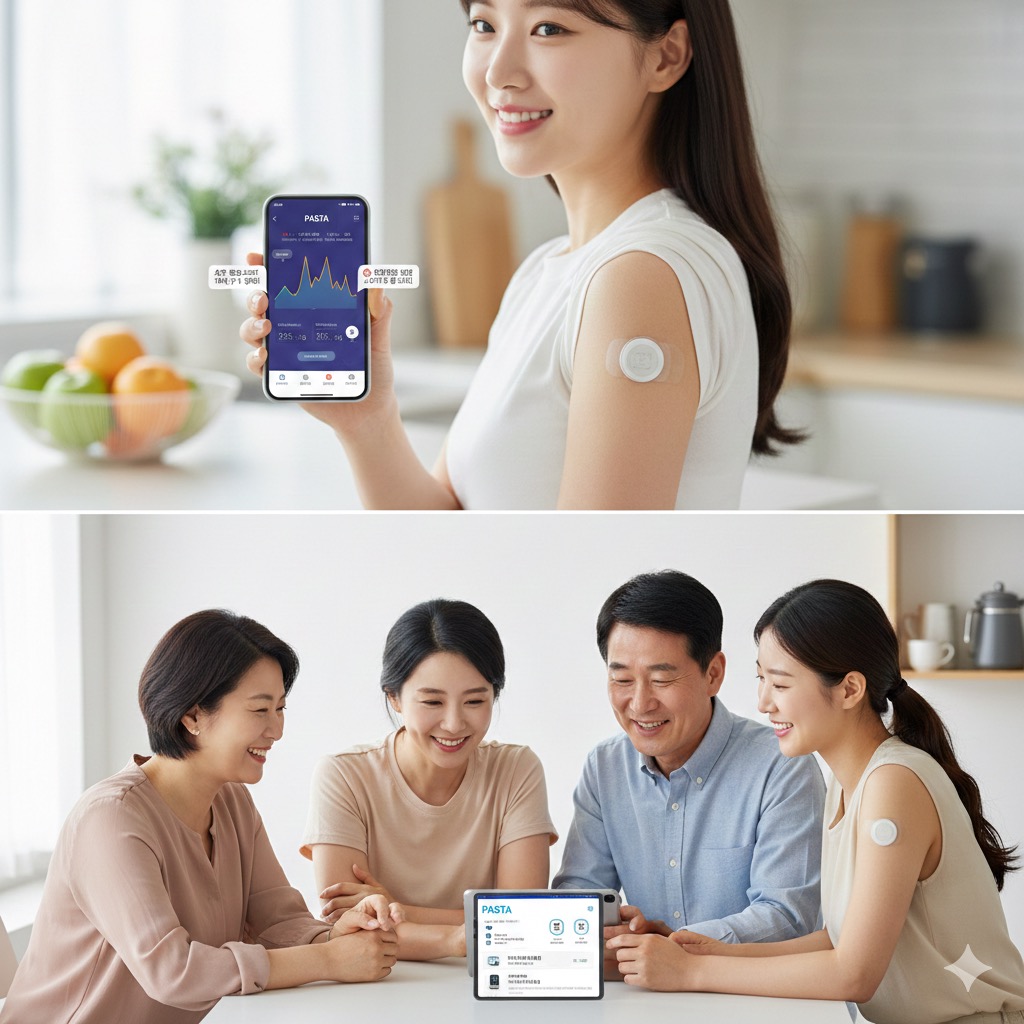
According to data from the Korean Diabetes Association, approximately 5.33 million Korean adults aged 30 and over have been diagnosed with diabetes. When the estimated 14 million people in the pre-diabetes stage are included, nearly 20 million individuals fall within the high-risk group. To address this massive at-risk population, a wave of digital blood glucose management services — combining Continuous Glucose Monitors (CGMs) with AI-powered mobile apps — is rapidly reshaping how Koreans manage their metabolic health.
■ Medical Benefits — Catching the ‘Silent Risk’ That Routine Check-ups Miss
Blood glucose spikes — a sharp rise and fall in blood sugar levels following meals — are not detectable through standard fasting glucose tests commonly used in regular health screenings. Repeated glucose spikes can trigger mass production of reactive oxygen species that damage vascular endothelial cells, and accumulated clinical evidence links the pattern to elevated long-term risks of cardiovascular diseases including arteriosclerosis, myocardial infarction, and cerebral infarction. CGM devices use a small sensor adhered to the skin to measure blood glucose continuously around the clock, transmitting real-time data to a paired smartphone app. AI algorithms then analyze individual glucose patterns and generate personalized feedback on diet and physical activity. Clinical studies have reported meaningful improvement in HbA1c — a two-to-three month average blood glucose indicator — among users who consistently adopt CGM-based monitoring.
■ Patient Safety — Understanding Both Promise and Limitations
Compared to traditional fingerprick self-monitoring, CGM-based apps eliminate the need for blood sampling, significantly lowering the barrier to daily monitoring. However, some medical professionals have raised concerns about users applying raw app data directly to self-diagnosis or personal treatment decisions without professional consultation. CGM apps are designed as supplementary monitoring tools to support lifestyle improvement — not to replace professional medical advice. Any diagnosis or treatment decision must be made in consultation with a qualified healthcare provider. ※ This information does not constitute medical advice.
■ Improved Accessibility — From Gen MZ to Middle Age, Glucose Management Goes Beyond the Clinic
The Korean market has seen a flurry of competing services. Glucofit, developed by Ranx, pairs arm-worn CGM sensors with an app that delivers real-time blood glucose readings and instant behavioral coaching — such as recommending a short walk immediately after a meal spike — supported by one-on-one physician coaching. Doctor Diary’s Glueaート (Glueart), which combines a diabetes community platform with glucose-focused weight management, reportedly surpassed 3,000 enrolled users shortly after launch. Kakao Healthcare’s PASTA app takes an aggregator approach, enabling users to connect multiple CGM devices — including iSens’s CareSens Air and Dexcom’s G7 — through a single interface, while providing clinically reviewed content certified by the Korean Diabetes Association. The user base has expanded beyond diagnosed diabetic patients to include weight-conscious and health-oriented non-diabetic users.
■ Cost Efficiency — Global Market Expanding; Domestic Affordability Remains Key
The global digital diabetes management market was valued at approximately USD 23.35 billion in 2024, with projections indicating a compound annual growth rate (CAGR) of approximately 9.6% through 2032, according to Fortune Business Insights. Looking specifically at the CGM device segment, the market is projected to grow from roughly USD 9 billion in 2023 to over USD 23 billion by 2029, per data from iSens and Fortune Business Insights. ※ Market figures may vary depending on the research firm and scope of coverage. In Korea, device costs remain a barrier to widespread adoption, though growing competition and ongoing discussions around insurance support are expected to gradually improve affordability.
■ Adoption Status — Startups and Big Tech Converge on Blood Glucose Management
Ranx, the operator of Glucofit, has secured pre-Series A funding and is expanding its business model to include B2B corporate wellness programs targeting employee health management. Kakao Healthcare has established a partnership with global pharmaceutical leader Novo Nordisk, combining its AI capabilities with the company’s diabetes treatment expertise to enhance its service offering. With both domestic startups and major technology companies entering the space simultaneously, the digital healthcare ecosystem targeting Korea’s 20-million strong at-risk population is expected to accelerate significantly in the years ahead.
※ The medical information contained in this article is based on publicly available research and industry data. It is not intended to replace professional medical advice, diagnosis, or treatment.