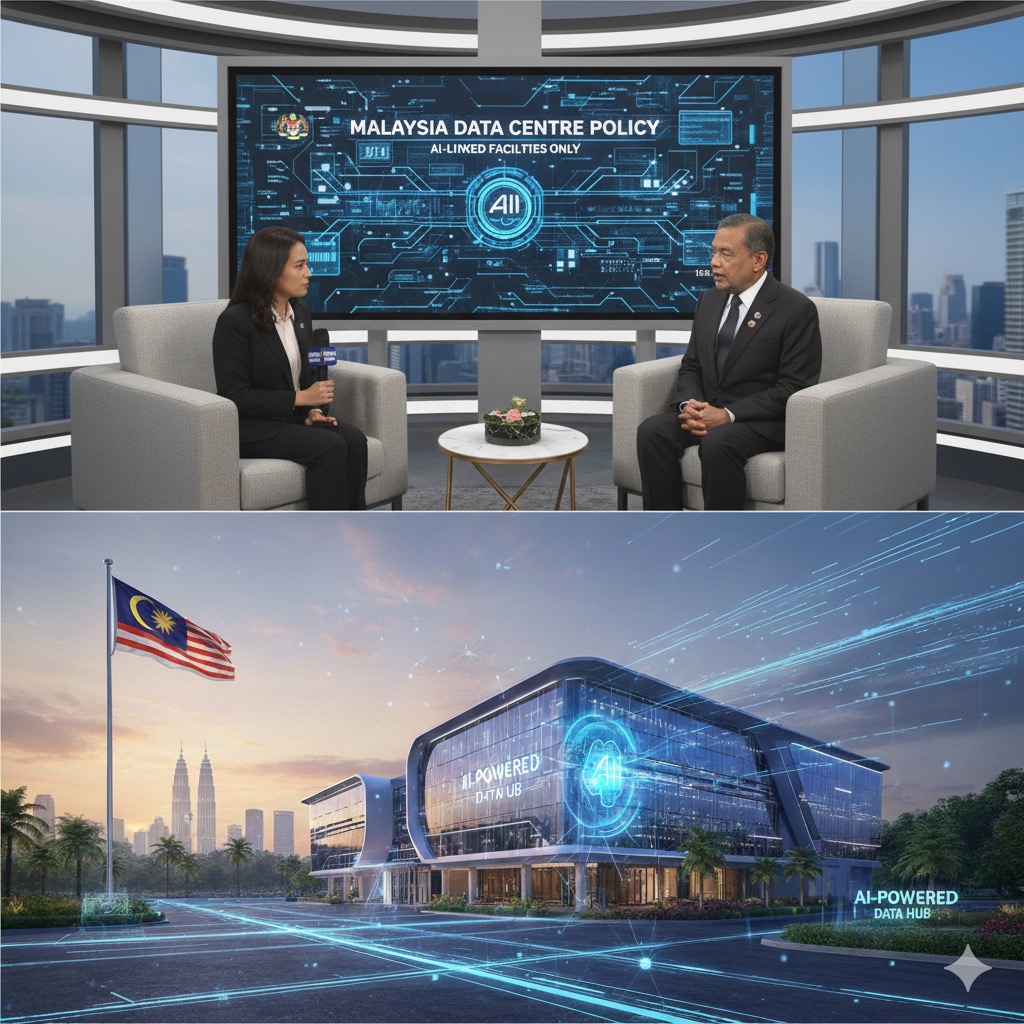
Malaysia has officially moved to restrict new data centre approvals to only those that demonstrate clear benefits in artificial intelligence or advanced technologies. Prime Minister Datuk Seri Anwar Ibrahim announced the policy stance during Prime Minister’s Question Time in the Dewan Rakyat on February 24, 2026, signaling a significant shift in how the country manages its digital infrastructure growth.
Regulatory Impact
Malaysia’s low-cost water and energy resources have made it an attractive destination for data centre investment over recent years. However, parliamentary concerns over surging electricity and water consumption prompted the government to formalize its selective approval approach. Anwar confirmed that restrictions on non-AI-related data centres had already been in effect for approximately the past one-and-a-half to two years, with all unrelated applications halted. Regarding national grid stability, the Energy Transition and Water Transformation Ministry’s projections indicate the current grid can accommodate demand for the next two years — though this figure represents a ministerial projection and should be interpreted with appropriate caution pending further official data. For longer-term capacity, Malaysia is exploring participation in the Asean Energy Grid as a regional solution.
Compliance Requirements
Businesses seeking to establish data centres in Malaysia will now need to demonstrate a substantive connection to AI capabilities or advanced technology value creation. Facilities designed solely for general-purpose cloud hosting or conventional server operations are expected to face significant barriers to approval. Detailed evaluation criteria and guidelines for existing operators have not yet been formally published, making the release of implementing regulations a critical next step for industry participants.
Industry Response and Global Context
This policy shift positions Malaysia as a quality-over-quantity destination in Southeast Asia’s competitive data centre market. The move echoes Singapore’s earlier moratorium on new data centre construction due to grid saturation concerns, reflecting a broader regional trend toward managed, technology-aligned digital infrastructure growth. Against the backdrop of the EU AI Act and evolving AI governance frameworks in the United States, Malaysia’s approach may serve as a reference point for other Asian nations navigating the balance between attracting investment and ensuring national infrastructure resilience.